Because Over-Engineering is Underrated
Rigid Low-Pressure Line Cover & Gasket
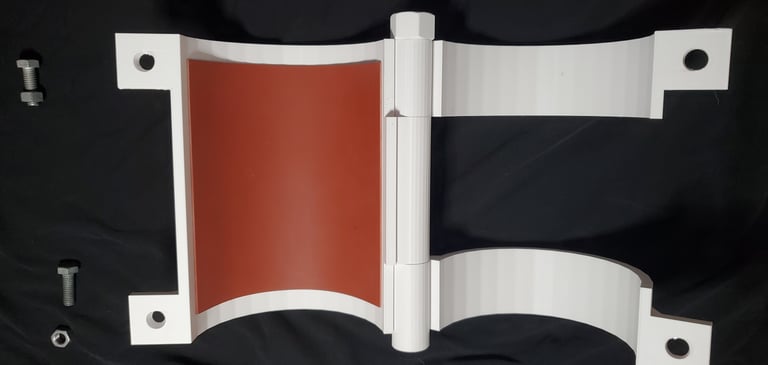
Because of the location of the blockage, a serious sewage line clog required a new access hole to be cut into the cast iron sewage pipe. Spinning Jenny Custom Manufacturing created a custom line cover that provided rigid protection and a tight seal to protect the line while ensuring ease of access.
PROBLEM STATEMENT
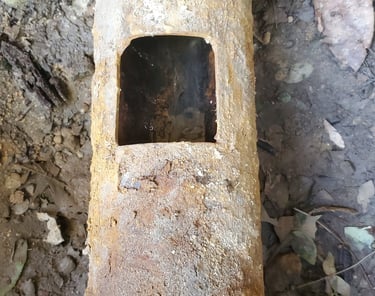
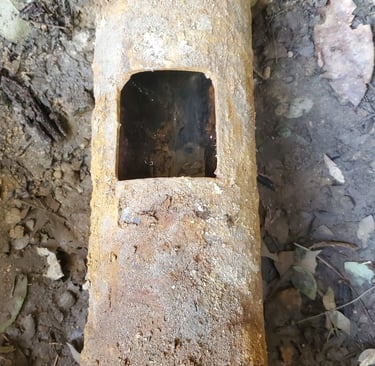
A sewage line became clogged by a mixture of toilet paper, trash, and rubber gloves. The root cause was the rubber gloves flushed down the toilet by an elderly resident of the home, which became glued together by a slurry of saturated toilet paper and human waste, and formed a perfect, almost impossible to remove seal. The existing cleanouts on the line didn't provide good access to the location of the clog, so the plumber cut a 4"x4" access hole into the pipe right where the line emerged from the affected bathroom. He was able to clear the line but the clean out left an open hole on the top of the pipe. The situation is likely to recur in the short term, but over the long run, will unfortunately resolve itself when the elderly resident is no longer in the home.
The homeowner has decided to leave the area around the pipe uncovered for now (hidden by an attractive planter) until the potential requirement for quick and frequent access is resolved. So he needs a reliable temporary cover for the hole that will seal and protect it, but is easy and quick to remove and replace.
AoA: ANALYSIS OF ALTERNATIVES
The ideal solution would have been to place a clean-out pipe at this point in the pipe for ease of access if the situation re-occurs. However, the quote for adding the clean-out was nearly $800. A second estimate came in at nearly $900, so that approach was discarded.
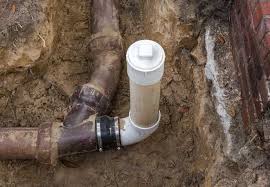
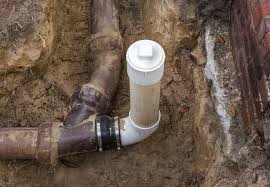
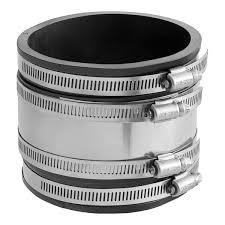
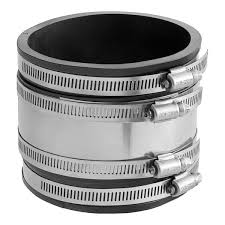
To code, patching the hole in the pipe as a temporary fix would require covering it with a stainless steel covered rubber gasket (a Fernco hub.) This would have provided a rigid cover and a seal, but came with two problems: First, it was expensive - even if the homeowner installed it himself, the part cost over $150 (much more if the plumber provided and installed it.) Second, it was going to be somewhat difficult to install and remove, and the homeowner may need frequent access to the hole in the short term.
Two other "ad-hoc" engineering solutions were considered: First a split section of 4.5" OD PVC pipe could be placed over hole. This would have provided some protection to the hole, but would not have provided a seal, making it likely that sewage would seep out from under the PVC, or dirt and rainwater would infiltrate the sewage line during heavy rain. The other approach was to wrap a rubber gasket around the hole and hold it in place with hose clamps. This would have sealed the hole, but not protected it. Plus, that approach wouldn't support ease of access by a single person.
SOLUTION DEVELOPMENT
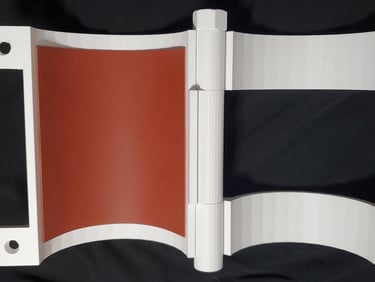
Spinning Jenny developed a custom cover matching the cover's inner diameter to the outer diameter of the pipe. Two retaining clamps were provided for the cover and attached by a fixed hinged knuckle and threaded pin with matching bolt. The bottom of the bolt hole in the hinge was countersunk to hold a smaller galvanized steel bolt into place during installation. Both the hinge knuckles and the clamp attachments were flared to reinforce against soil load.
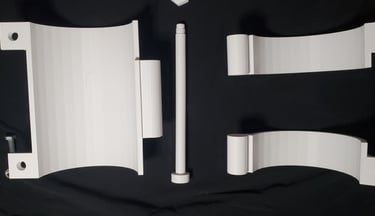
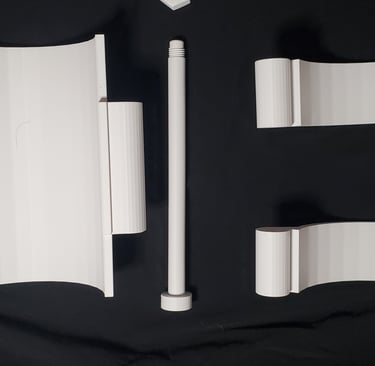
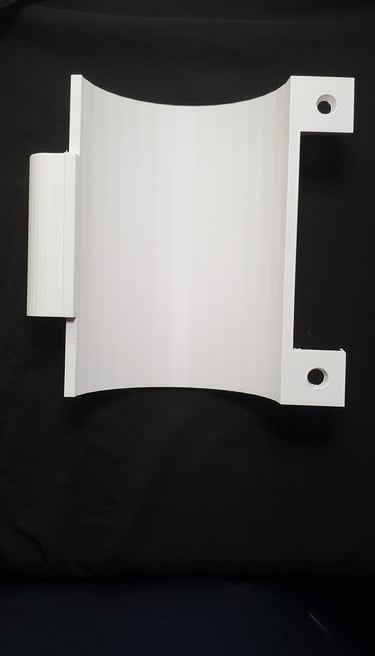
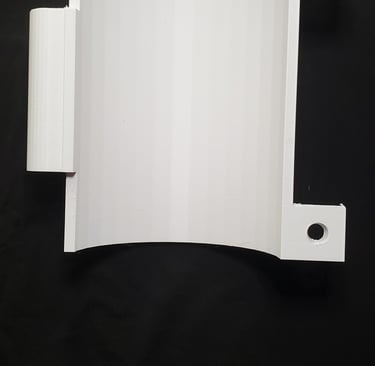
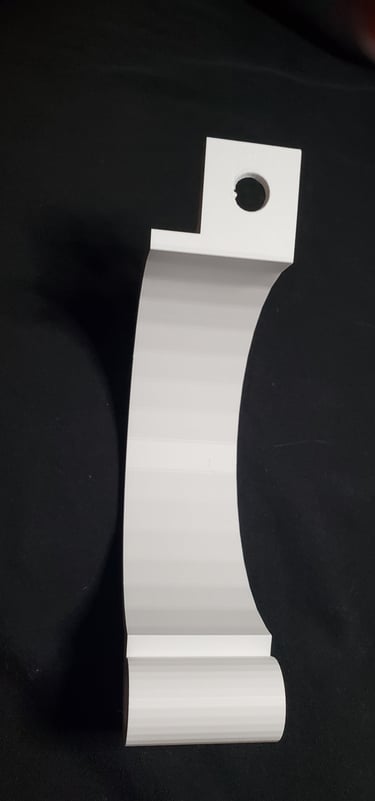
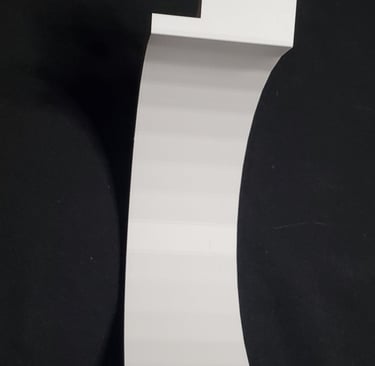
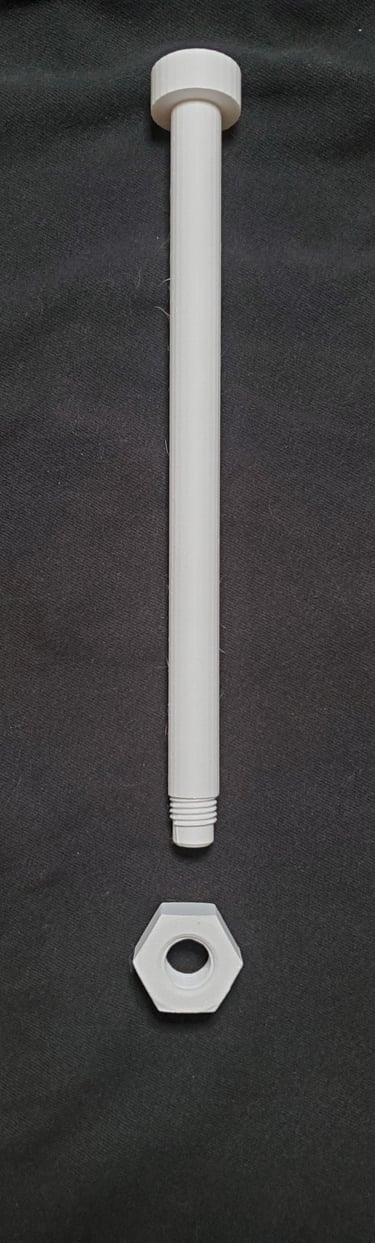
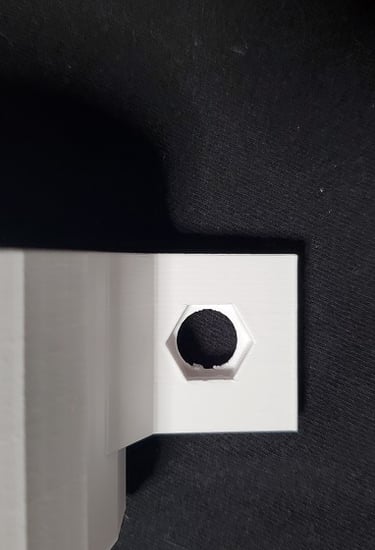
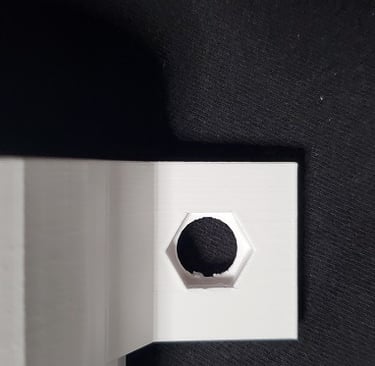
This provided a tight, rigid and durable cover for the hole that could be easily installed and removed. A 6"x6" piece of plumbing gasket (Styrene Butadiene rubber, or "red rubber") was glued into the cover. Thickness was initially planned for 1/8" but testing showed that 1/16" thickness provided a better watertight seal, so that was used in the final product. Rubber toughened cyanoacrylate (super glue gel) was used to attach the gasket to the cover (although the gasket was really attached with glue for ease of installation - once it's in place, compression holds it where it needs to be.) For final assembly, galvanized steel bolts were place in the countersunk bolt hole and affixed with cyanoacrylate, and the hinge pin nut was threaded onto the hinge pin threads after a light coat of cyanoacrylate was placed on them.
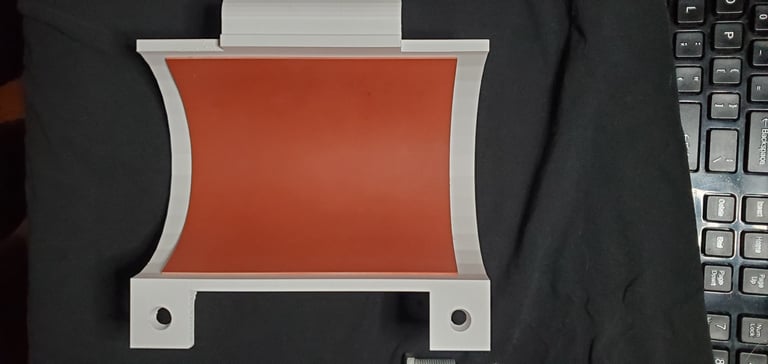
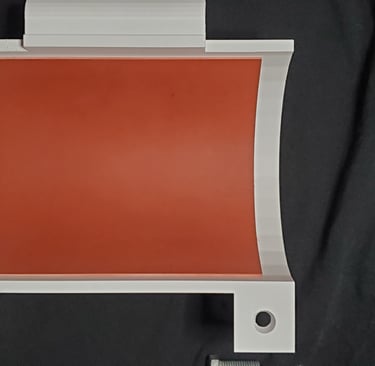
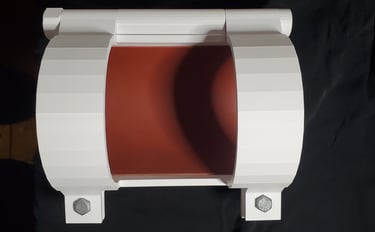
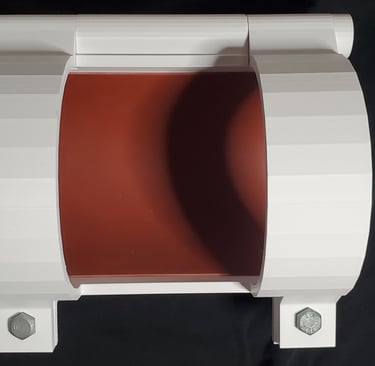
Final testing was done using a scrap piece of 4.5" OD PVC pipe. A 4"x4" hole was cut in the pipe, and one end was sealed. The hole was covered with the custom fitting and proved to be watertight.
Plastic parts were printed from PETG, using 6 outer shells (wall loops) to provide strength and prevent water infiltration. Gyroid was used for internal infill to provide crush, impact and shear resistance, with a 50% density for strength.
RESULTS
The pipe cover can easily be installed by one person in a few minutes. Because the bolts are attached to the cover's retaining clamps and oriented straight up, there's no fumbling with lining up the bolts and nuts. Just slip the cover over the hole, bring up one of the bottom pieces, put the nut on the affixed bolt, and tighten, then repeat with the other side.
Removal for access to the hole is just as fast, requiring only a socket wrench. Total material cost of the solution, including SBR gasket, printed parts, and the galvanized steel nuts and bolts, was less than $17.
After the need for quick access ends, the homeowner can cut out that section of hole and splice in a length of PVC pipe using Fernco couplings and rebury the pipe - albeit at a cost in the $100s.
Or not. While the cover was designed for temporary access, if the PETG parts are covered with a coat of rubberized undercoating spray paint (to extend their lifespan by preventing water infiltration through microscopic flaws introduced by the FDM manufacturing process) they should remain structurally intact at least 50-100 years underground and away from UV rays. The galvanized bolts would last 50-75 years, far beyond the remaining lifespan of the sewage pipe (the outside lifespan of a cast iron sewage line is 100 years or so, and the house was built in the early 1960s, so the existing sewage system has at most 40 or so years to go.) The only weak spot is the SBR gasket, which would probably deteriorate in 5 years or so when buried - and the cyanoacrylate would probably lose strength before then in a moist underground environment .
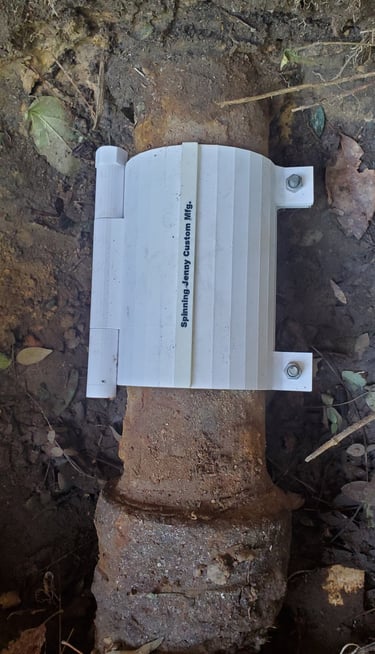
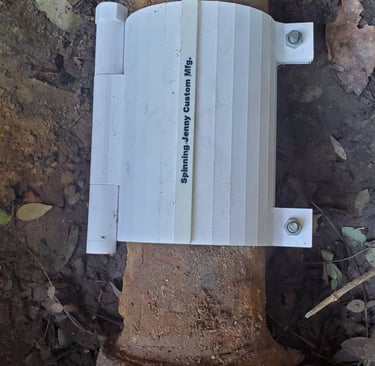
Replacing all that with a 6"x6"x1/16" sheet of EDPM rubber, bonded with rubber cement, and treating the PETG with rubberized paint would raise the total cost of the fitting to about $38 (at retail, the EDPM sheet is about $15, and cost of the rubberized spray paint about $11 a can, although it would only take a small fraction of a can to coat the part, so there would be some rubberized spray paint left over for another project.) Compare that to well over $100 for a commercial fitting (which wouldn't be code either for a permanent repair to a buried pipe), or many hundreds to splice the pipe for compliance, not because it's actually needed.
(Steve looked up from his bowl of cream and coffee - he might be a cat, but he's an engineer cat - and pointed out that we're being a little unfair to the plumbing code writers: the reason for the splicing requirement is so that a mechanical gasket patch like ours doesn't leave a rough lip inside the pipe for things to catch on. That would be perfectly reasonable in a modern system, but this one is old enough that they were still using hub and spigot fittings, so the whole system is already full of rough and jagged places for disgusting things to lodge.)
The printed cover should perform far beyond the remaining life of the sewage system (or the homeowner, for that matter) at a small fraction of the cost of the code approved solution. The homeowner can make that call when the time comes - although since his original plan was to cover the hole with a short length of PVC snapped around it and then rebury the pipe, I would on bet which way he'll go. If another part is printed for permanent placement, Steve will probably recommend a third, center retaining clamp arm underneath the cover, given how easy they are to fasten during installation.